

How to Check Scopus Indexed Journals
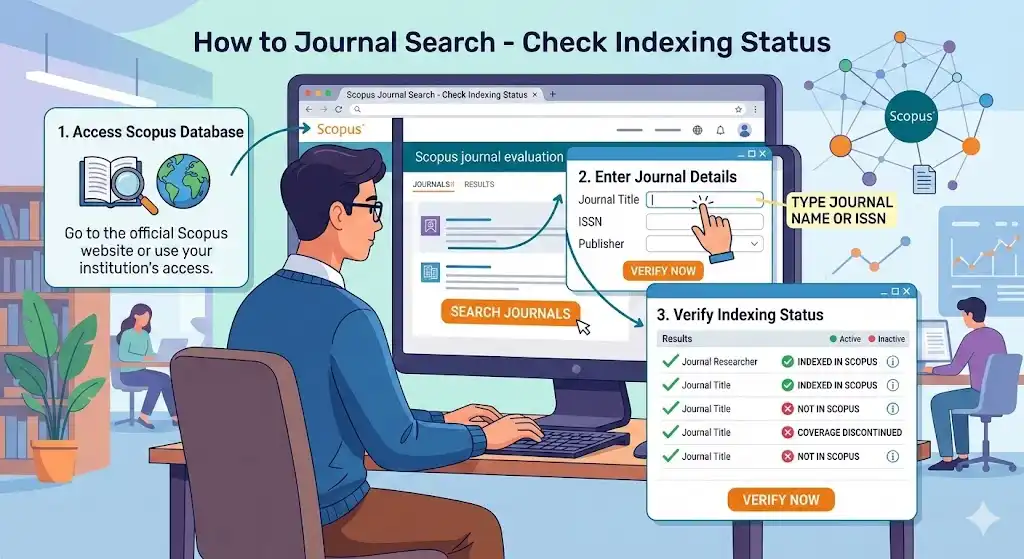
How to Check Scopus Indexed Journals: A Complete Guide for Researchers in 2026
You Did the Work. Now Make Sure It Counts.
Months or even years of hard work have gone into that research project of yours. It was worth it because the research is sound, and the writing is top-notch. Yet, as you prepare to click that submit button, there is one nagging thought that makes you pause and wonder:
“Is this journal Scopus-indexed?”
It is a simple question. However, ask any researcher who has had their work published in a predatory journal or who had their work rejected in a funding proposal, and they will tell you that this single step can make or break their career.
This guide will help you understand how to verify whether or not a journal is Scopus-indexed, what this really means, and what common mistakes most researchers make in choosing a journal to publish their work in.
What Does “Scopus Indexed” Actually Mean?
Now that we have that out of the way, let’s talk about what we’re actually looking at.
What does it mean to say that a journal is “Scopus Indexed”?
In simple terms, the journal has met the editorial and quality standards set by Elsevier’s Content Selection and Advisory Board (CSAB) to be included in the Scopus database.
Why does it matter that your research was published in a journal that is Scopus-indexed?
Here are a few reasons why it matters
Your research will be visible to millions of researchers across the world. Citations will be tracked. The h-index and CiteScore will be improved. In many countries, especially in Asia, the Middle East, and parts of Europe, publication in a Scopus-indexed journal can directly affect incentives and PhD requirements. In other words, being published in a journal that is Scopus-indexed is important because it can affect your career.
The Official Way: Using Scopus Source List
The most official way to verify whether a journal is indexed in Scopus or not is to use the official sources list provided by Scopus. Below are the steps to do so:
Step: 1
- Open the Google search box
- Enter the URL: https://www.scopus.com/
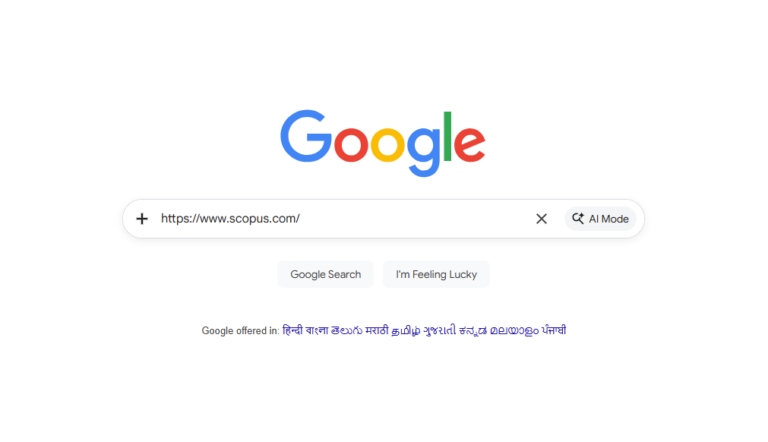
Step: 2
Once you enter the URL, it will direct you to the Official page of Scopus
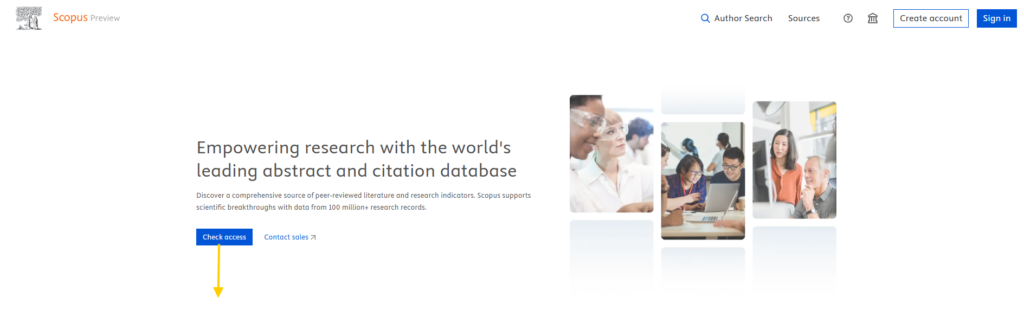
Step: 3
Get an active Scopus list from the Scopus homepage. Scroll down from the home page Scopus source list.
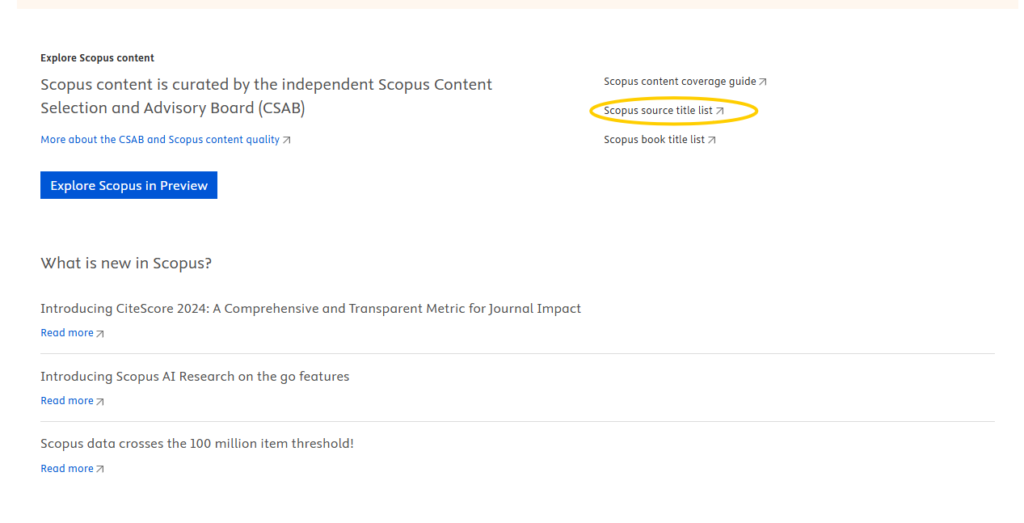
Step: 4
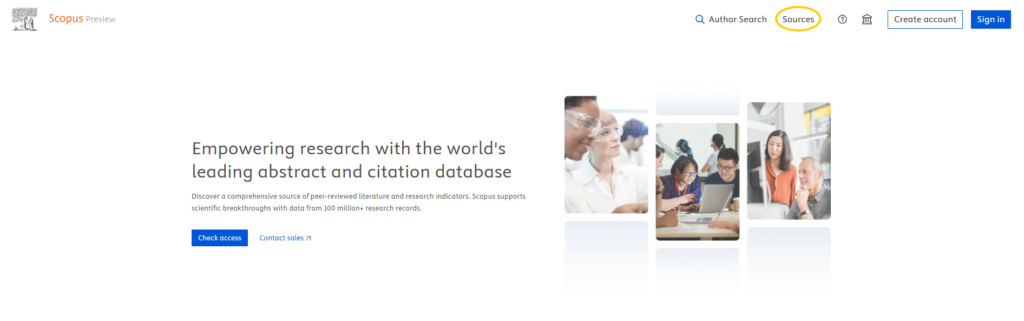
Click on the sources option displayed at the Top of the page
Step: 5
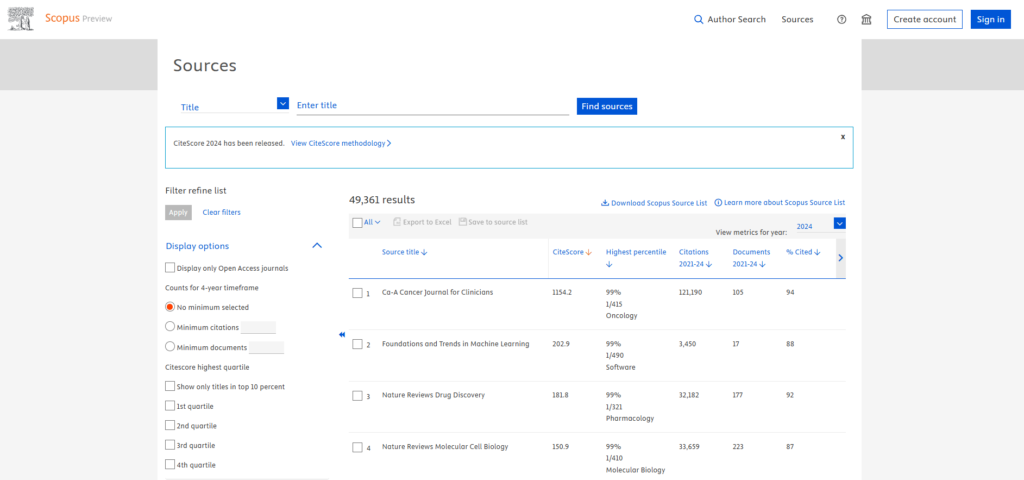
- You will be able to see all Journals displayed on the Web Page
- Validate whether your specific journal is in the source or not
Step: 6
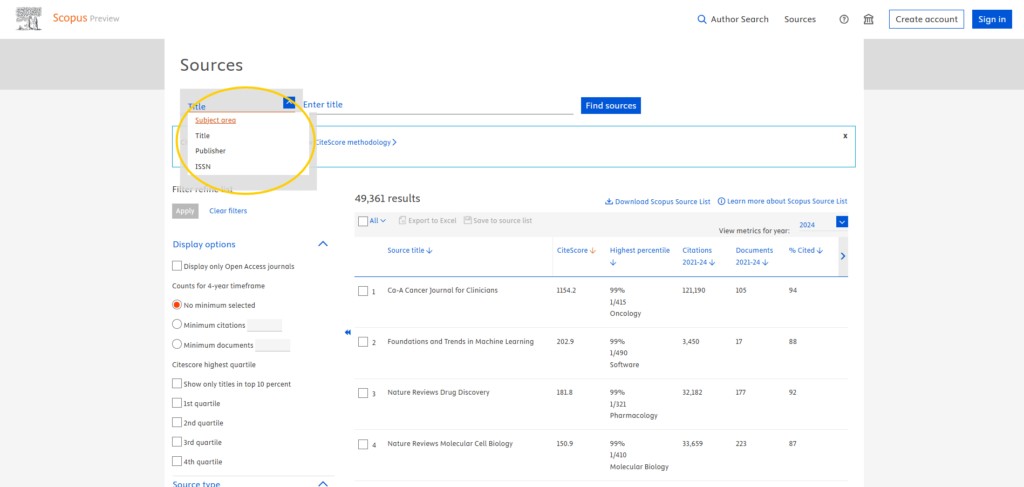
You can find out with various options, through subject area, ISSN or based on the publisher.
Step: 7
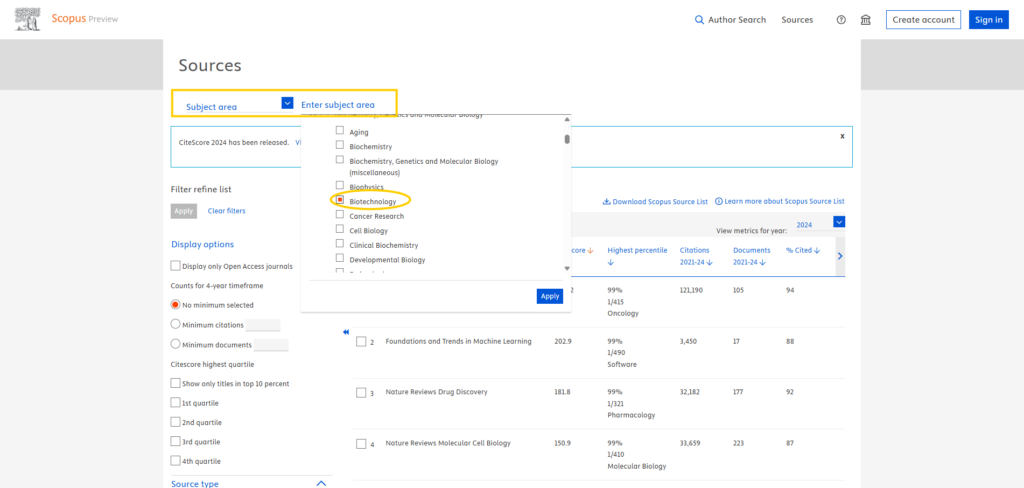
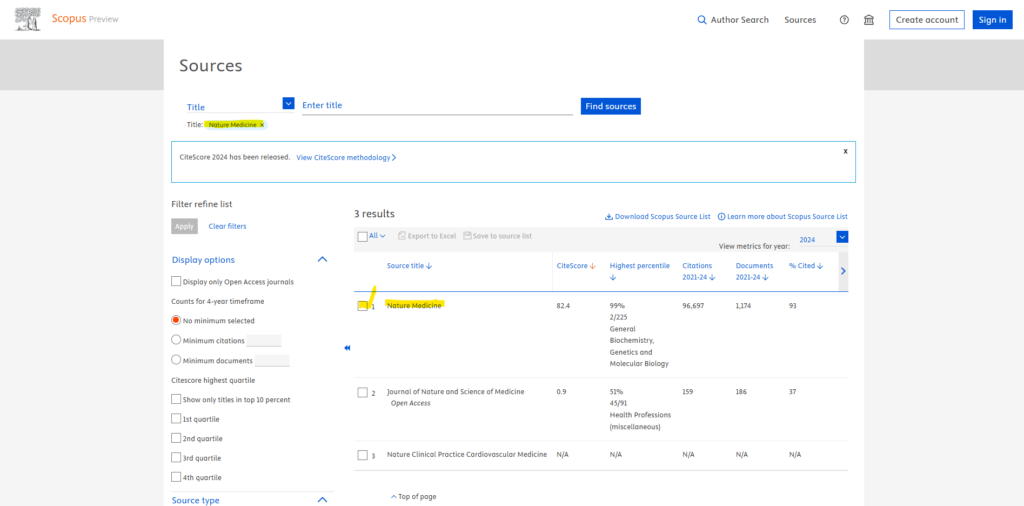
Enter the Targeted Journal name under the Subject Area or ISSN Option
Step: 8
Based on the selected title, we can get the Specific journal in the results session below.
Step: 9
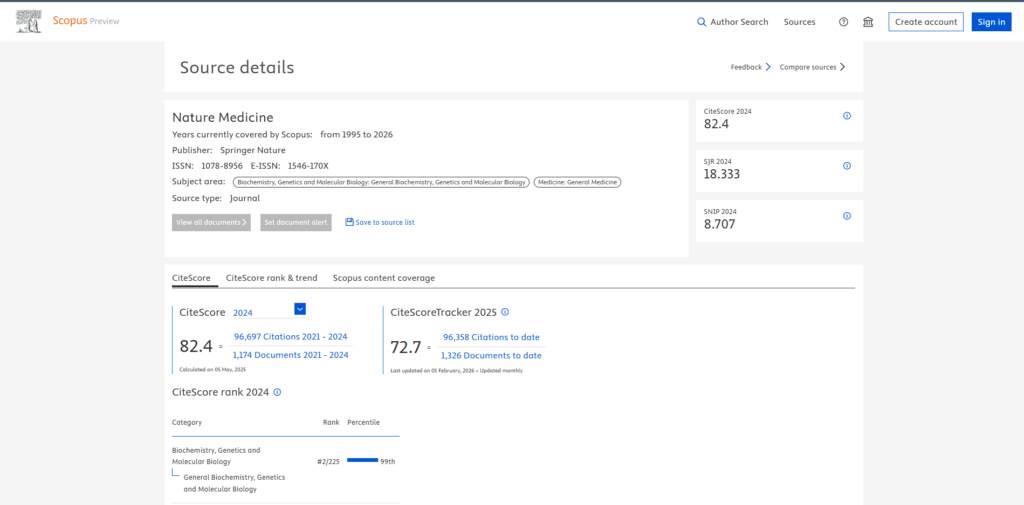
You will get the Entire Details about the journal by clicking on the Name of the Journal.
The Scopus Title List: Your Offline Reference Guide
If you want to check several publications at once, for a research paper, departmental publication, or institutional publication, Scopus offers an Excel file containing the title list of all indexed publications.
To get the title list, you can go to the Scopus Sources page and click on “Download Scopus Source List.” This title list is updated regularly and includes thousands of publications, including ISSNs, publishers, categories, and publication status.
This is especially useful for librarians, research department staff, and graduate coordinators who have to guide several authors at once.
Cross-Reference Using SCImago Journal Rank (SJR)
Many seasoned researchers make use of cross-referencing with the SCImago Journal & Country Rank portal at scimagojr.com in addition to Scopus journal indexing. SCImagoJR is a totally free database that uses Scopus data exclusively and presents it in a very accessible and visually appealing way.
On SCImago, journals are grouped according to their quartile rank: Q1, Q2, Q3, and Q4, based on their subject area grouping. A journal in Q1 is in the top 25% of its subject area, while a journal in Q4 is in the bottom 25%.
The quartile rank is a standard reference point in the evaluation of academic performance globally. Many universities have made it explicit that promotion, PhD completion, and grants require publications in Q1 or Q2 Scopus journals.
If a journal is listed in SCImago, we can be sure that it was or is currently Scopus-indexed. We can filter the journals based on the “Year” option to see the coverage of different time periods.
Red Flags: How Predatory Journals Fake Scopus Indexing
This is something that nobody ever makes clear enough to new researchers: being Scopus-indexed and claiming Scopus indexing are two very different things.
One of the ways in which predatory journals abuse Scopus is by claiming Scopus indexing for themselves, even though they are not actually Scopus-indexed. This could be because they have a paper that was cited in a Scopus-indexed paper at some point in its history, or because they are citing a Scopus indexing that was withdrawn years ago.
Beware of these red flags if a journal claims Scopus indexing, but something does not add up:
The journal cannot be found in the official Scopus source list. The website appears to be hastily constructed or newly developed. The journal publishes papers with unusually rapid processing times, as fast as 24 to 48 hours. The journal covers topics that are suspiciously wide-ranging, including everything from engineering to social sciences. There is pressure to pay publication fees before the peer review is complete.
Always check using scopus.com/sources instead of relying on information on a journal’s own website.
What Happens When a Journal Gets Delisted?
When a journal is delisted, it is because it is no longer meeting quality standards. This could be because of a drop in peer review standards, ethical issues, and other editorial issues.
If you have published a paper in a journal that gets delisted, it doesn’t mean that your paper is delisted. However, it is less visible. This is why it is extremely important to check if a journal is active, not just if it is listed.
When you use the Scopus sources tool, it is essential to check the coverage period. For example, if a journal is listed and its coverage ends in 2020, it was likely active and listed on Scopus until 2020.
Verifying the Scopus Indexing for Conference Proceedings.
For researchers in the fields of engineering, computer science, and technology, conference proceedings are equally important sources of information, just like journal publications. Scopus has indexed some conference proceedings, and the process to verify this is almost the same. To verify the Scopus indexing for conference proceedings, you need to modify the ‘Source Type’ filter from ‘Journal‘ to ‘Conference Proceedings‘ on the Scopus sources webpage and search the name or ISSN of the conference. Please note that not all papers published in a conference that is indexed in Scopus will be indexed, and some conferences may have ‘partial coverage,’ which means that not all years or volumes are indexed.
A Practical Checklist Before You Submit
Before you submit your manuscript to a journal, it is a good idea to go through this quick verification checklist:
- Try searching for the journal’s ISSN on scopus.com/sources and check if it is marked as “Active.”
- Cross-check on scimagojr.com and note the quartile position of the journal. You should also check the journal’s Cite Score to understand its citation score.
- Verify the journal’s coverage years to ensure it is up-to-date and running without a gap. You should also verify the journal’s publisher on some recognized online platforms like DOAJ for open-access journals.
- Try searching for the journal on your institution’s approved journal list, if available.
Why Researchers Get This Wrong (And How to Stay Ahead)
The biggest mistake researchers like you make is checking Scopus for its title list only once during your PhD and never checking it again. The truth is that Scopus updates its title list multiple times a year! The journal that your colleague submitted to two years ago might not be valid today.
Make it a habit to check every submission before, not just once during your PhD and never again.
The second most common mistake is checking journal ranking websites that are not affiliated with Scopus or Clarivate. Dozens of such websites claim to display “Official Scopus journal lists.” These are often outdated, incorrect, or even intentionally deceptive! Always check scopus.com directly if you are unsure.
Scopus vs. Web of Science: Do You Need Both?
One question I get asked most often by young researchers is: “Do I need to target Scopus and Web of Science indexed journals, or is Scopus enough?“
Well, my honest answer is: “It depends.“
Web of Science, especially Science Citation Index Expanded (SCIE), is a very high-impact database, and publications in this database are often required for Journal Impact Factor (JIF). Some funding agencies and universities in Europe and North America require WoS publications.
However, Scopus has more coverage in terms of the number of journals, countries, and disciplines. It is also more “inclusive” and is widely accepted in Asia, the Middle East, and South America.
Most researchers try to target both Scopus and Web of Science-indexed journals. But if you are forced to choose, understanding your university’s needs first can help you avoid making the wrong decision.
Struggling to Find the Right Scopus-Indexed Journal for Your Research?
This is where many researchers hit a wall – not because they don’t understand the process, but because finding the right journal for your specific paper is not just about checking if it is indexed in Scopus! It is also about checking scope, turnaround time, acceptance rate, quartile ranking, and even open access requirements, all at once! This is where our journal selection and publication support services are designed for. At IdeaLaunch – We help PhD scholars, research scholars, and professors across engineering, management, medical sciences, and social sciences find the best-suited journal for publishing research work and help them write and submit manuscripts for publication.
What We Offer:
Journal Identification & Scopus Verification: We identify and select the best-suited journal for publishing research work from Scopus and SCI-indexed journals based on research topics, manuscripts, and journal timeline requirements.
Manuscript Editing & Formatting: We help you edit and format research work according to journal requirements and subject matter expertise.
Plagiarism Check & Similarity Reduction: We help you reduce plagiarism and increase similarity for journal submission.
Response to Reviewer Comments: We help you craft a response to reviewer comments and address them professionally for higher acceptance probabilities.
Fast-Track Support for Urgent Deadlines: We help research scholars working under tight deadlines for promotions, funding, and PhD submission.
We have assisted scholars in publishing in Q1 and Q2 Scopus-indexed journals in over 40 research fields. Our process is transparent, quick, and proven through the publication records of our clients.