

How to Publish a Paper in Scopus Indexed Journals
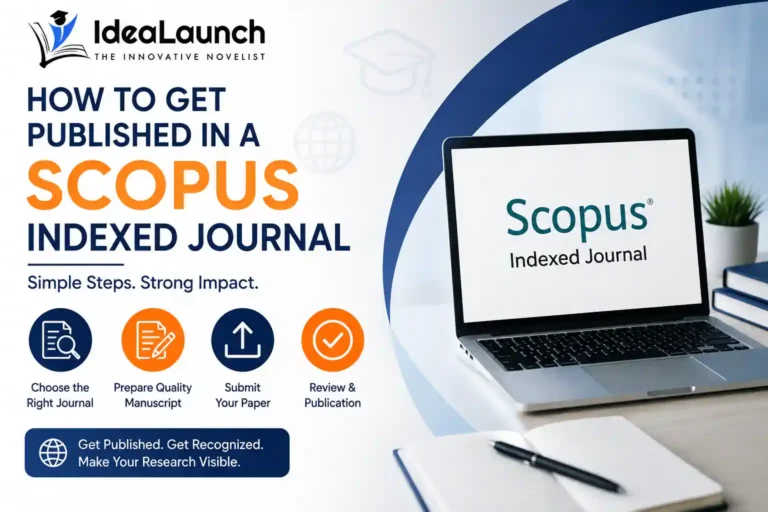
Table of Contents
How to Get Published in a Scopus Indexed Journal
Publishing your paper in a Scopus-indexed journal is not only about doing the research paper and then submitting it to a journal that purports to be indexed. There must be a contribution, good methodology, the right journal, and the right submission approach, among other things, for the research to see the light of day.
The process of publishing could be conceptualized into six stages: research quality → journal suitability → manuscript readiness → submission → peer review → publication.
What Does It Really Take to Publish in a Scopus-Cited Journal?
Scopus Indexation Does Not Automatically Mean Journal-Research Compatibility
- The Scopus indexed journal does not guarantee that it will suit your research.
- Indexation refers to a journal’s indexing characteristics, and journal fit means the suitability of your research theme, methods, and contribution to the journal’s subject field.
- Prior to submitting the paper, make sure that the journal’s subject matter, aims, and scope match those of your paper, as well as recent journal publications.
Good Research Is Always More Important than Publishing Strategy
- No strategy can help you publish a research paper without a clearly stated problem, solid evidence, and a contribution.
- Your research should describe the prior state of knowledge and outline the research gap, then show what your work adds to it.
Editorial Screening Precedes Peer Review
- Some manuscripts are screened by journal editors prior to being sent to reviewers.
- Scope of research, novelty of research, structure of manuscript, ethics statements, formatting, and adherence to journal guidelines may play a role in it.
Publication is not Guaranteed by High Quartile, CiteScore, or Other Metrics
- Quartile, CiteScore, etc. may be helpful in comparing journals; these are not a guarantee of publication.
- It is important to consider other aspects like research fit, originality, methodological approach, and clarity.
How to Publish in a Scopus Indexed Journal: Six Necessary Steps
Step 1: Identify the Research Gap and Contribution
- Firstly, identify the problem that your research aims to solve. Indicate what has not been solved and why there is such a gap. Do not use expressions like “little research exists”Indicate a real gap, contradiction, or limitation.
- The contribution of your study must be evident from one or two sentences.
Step 2: Validate Your Methodology, Data and Research Ethics
- Select the research methodology that is suitable to answer your research questions. Provide a full description of sampling, instruments, and analysis
- If you are dealing with any human subjects, sensitive data, or restricted databases, make sure to address ethics issues beforehand.
Step 3: Find a Suitable Scopus Journal for Your Research
Journal selection must be based on facts rather than on journal rankings only.
- See what the aims and scope of the journal are.
- Compare recent articles published by the journal.
- Verify its current status in Scopus.
- Evaluate related metrics in your field.
- Check for any APC, waiver, license, and OA policy.
Prior to submission, you can refer to IdeaLaunch’s guide on how to check Scopus-indexed journals to get information about the procedure.
You can also compare journal levels using tools such as Q1 journal before deciding whether your research suits that level. Researchers publishing domestically may also find our list of Scopus indexed Indian journals useful.
Step 4: Prepare Your Manuscript for Editorial Screening
- The title and abstract of your manuscript should convey the problem, approach, and main contribution of your study.
- The introduction of your manuscript should set the research gap rather than summarize literature on the topic.
- Your methodology should contain enough information for evaluation. The results and discussion should elaborate on the significance of the results obtained.
Step 5: Submitting Smartly and Dealing With Peer Review
- Write a targeted letter covering the findings, significance of the work, and reasons why the manuscript is suitable for the chosen journal.
- Before the submission process, complete the ethics, funding, and conflict of interest declarations. Answer all the reviewers’ queries if they demand a revision of the manuscript.
Step 6: Finalizing the Process of Acceptance, Publishing, and Indexing
- Even after acceptance, there could be remaining work related to completing revisions, correction of proofs, copyright, or licensing issues.
- Keep in mind that publication and Scopus indexing happen in different steps. The article may not appear in the database even after its publication.
How to Select the Appropriate Scopus Journal for Your Research?
The selection of the right journal is where silent wins and losses in publication timing take place.
1. Always Check Scope, Never Just the Quartile
Start by reading the aims and scope. Is this journal publishing your kind of research, your setting, your methodology? The quartile does not tell you that at all.
2. Compare Your Research to Recently Published Articles
Look through two or three last issues. If there is nothing there that uses your methods, sampling, or framing, then the editor will be unlikely to see the connection you see.
3. Find Out Whether This Journal is Currently Indexed in Scopus
Look up the title or ISSN in the official Scopus indexed journal list. Badges and certificates provided by publishers are not evidence – how to check if the journal is in Scopus.
4. Check Quartile and Other Appropriate Metrics
Consider metrics from your subject category, where citation practices are similar. Look at both CiteScore and SJR & SNIP along with quartile ranking. You can also confirm your own indexed record through a Scopus author search.
5. Evaluate APCs, Open Access and Publication Policies
Prior to submission, confirm:
- APC costs and waiver conditions
- Conditions of open access and licensing
- Peer review and ethics policies
6. Be Aware of Suspended or Fraudulent Journals
Prior to submission:
- Evaluate Scopus-suspended sources.
- Identify unusual volume and citation practices.
- Do not accept guarantees of acceptance.
- Confirm the editorial board.
See IdeaLaunch’s list of Scopus journals.
New Challenges Researchers Need to Consider Before Scopus Submission
There are additional factors that researchers have to keep in mind when preparing a manuscript. They concern the use of AI, manuscript confidentiality, data privacy, ethics of research, and funding issues.
| Challenge | What to check Before Submission |
|---|---|
| Generative AI in Academic Writing | Follow the journal's AI-use policy and verify AI-assisted content. |
| AI-Generated References | Check every AI-generated citation against the original source. |
| AI Disclosure & Journal Policies | Disclose AI use when required by the journal. |
| Manuscript Confidentiality | Protect unpublished research and sensitive information. |
| Data Privacy | Apply appropriate access, storage and de-identification practices. |
| Collaborative Research | Establish clear data-sharing and privacy procedures. |
| Research Ethics & Consent | Confirm ethics approval and informed consent where required. |
| Data Transparency | Provide accurate data-availability information while protecting restricted data. |
| Funding Disclosure | Declare funding sources and relevant conflicts of interest. |
What Should You Check Before Submitting Your Manuscript?
Complete a final check prior to manuscript submission to avoid unnecessary desk rejection.
Follow the Author Guidelines of the Journal
- Check word limits, format, headings, citations, and references.
- Go through the guidelines one more time before submission.
Check References, Figures and Tables
- Check your citations and references.
- Verify the quality of figures, tables, and supplementary files.
- Use research paper editing services to get an overall technical check.
Complete Ethics and Funding Declaration
- Ethics, consent, and data availability.
- Complete funding and conflict of interest declaration.
Check for Similarity and Originality
- Conduct a similarity check before you submit the manuscript.
- Handle improper overlap with authentic rewriting.
- Check for self-plagiarism from previous works.
- Check for plagiarism through plagiarism checking services.
Write a Specific Cover Letter
Should contain:
- Findings of the paper and their significance
- Why is the journal a good fit for your paper?
- Paper’s originality and exclusivity
- Suggested reviewers
Author Information Verification
- Check author names, their order, ORCID, and affiliation.
- Make sure all authors have approved the manuscript.
- For pre-submission help, use our manuscript writing services.
Frequently Asked Questions
It usually follows the submission → editorial screening → peer review → revision →
either acceptance or rejection → production → publication scheme. It may be different from journal to journal.
You should reply in a point-by-point manner, describing each change made and citing evidence and disagreements professionally. Every single revision should be accounted for.
Search for the journal’s name or ISSN in the list of Scopus sources and determine if the journal is listed as a discontinued source.
Main reasons may include bad journal fit, weaknesses in methodology, insufficient contribution, poor presentation, and missing ethics or submission guidelines.
No. At once submitting the same manuscript to several journals is not an ethical practice.
Are You Ready for Scopus Publication?
Publication in Scopus-indexed journals requires an appropriate blend of research quality, journal choice, manuscript preparation, compliance, and peer-review management.
For end-to-end support, explore our manuscript writing services and journal publication services.
Prepare your research for Scopus journal submission — discuss your manuscript with our research team.