

Difference Between Scopus and Web of Science and PubMed
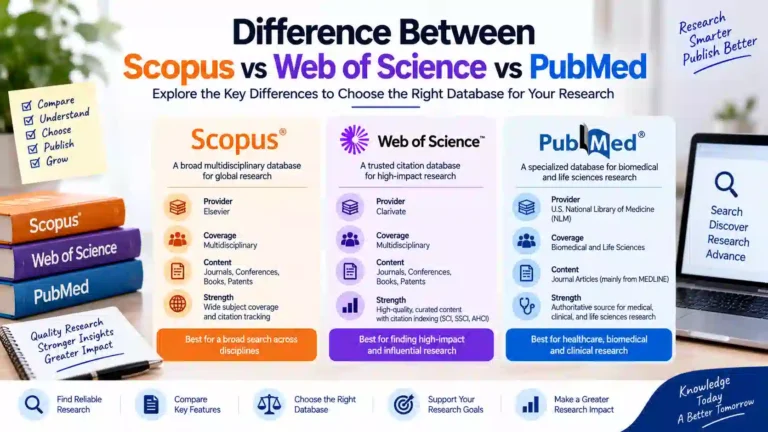
Difference Between Scopus vs Web of Science vs PubMed: A Researcher’s Guide
Researchers discover Scopus, Web of Science, and PubMed while doing a literature search, evaluating journals, conducting citation analysis, and conducting a systematic review. Though these databases are commonly discussed, the reasons for using these databases are entirely different.
A good understanding of the differences between Scopus, Web of Science, and PubMed makes researchers capable of choosing the right databases for their studies. It also helps them find the right sources of literature review in research.
What is Scopus ?
Scopus is a multidisciplinary database of abstracts and citations published by Elsevier. This database contains literature in the following areas: science, technology, medicine, social sciences, arts, and humanities.
Scopus proves to be especially helpful if researchers are looking to find publications and explore citation relations between them in different disciplines. Researchers planning to publish can learn more about Scopus indexed journals and how to check whether a journal is Scopus indexed.
Main Features of Scopus
- Multidisciplinary research scope
- Abstracts and citation data
- Author and affiliation details
- Citation tracking
- Journal metrics (CiteScore)
- Bibliometric and research impact analysis
- Journals, proceedings, books, etc.
Scopus may prove to be especially useful for researchers who work in the interdisciplinary field of research as related studies may be spread throughout several disciplines. If you are targeting this database, read our guide on how to publish a paper in Scopus indexed journals or explore Scopus indexed Indian journals.
What Is the Web of Science?
Web of Science (WoS) is a multidisciplinary database created by Clarivate. It includes carefully selected citation indexes, allowing researchers to search for scholarly articles and analyze citation relations.
Web of Science is widely applied for citation analysis, research assessment, bibliometrics, and determining articles included in specific collections. To understand its collections in detail, see the Web of Science Master Journal List.
Main Features of Web of Science
- Multidisciplinary scholarly literature
- Citation indexing
- Citation tracking
- Researchers and institutions analysis
- Bibliometric research
- Analysis of journals and publications
- Access to specialized citation indexes and collections
The important aspect to remember here is the fact that Web of Science and Journal Impact Factor are two different concepts. Journal Impact Factor belongs to Clarivate’s Journal Citation Reports, while Web of Science has several citation indexes and collections. Researchers aiming for this database can explore Web of Science journals and SCI indexed journals.
What Is PubMed?
PubMed is a free database offered by the United States National Library of Medicine. PubMed mostly covers biomedical and life sciences information.
PubMed is highly popular among scientists, doctors, practitioners, and other people looking for medical and biological studies
Main Features of PubMed
- Search of biomedical literature
- Search of life sciences literature
- MEDLINE citations
- Medical Subject Headings indexing
- Links to full-text articles when available
- Searching of clinical and healthcare literature
- Advanced searching possibilities
The utilization of Medical Subject Headings (MeSH) in PubMed creates a specific vocabulary for biomedical topics. It can be especially helpful for researchers who need precise searching in medicine and related fields, particularly during the identification of the research problem.
Difference Between Scopus vs Web of Science vs PubMed
The main difference between these databases is their scope, subject focus, indexing approach, and research purpose.
| Comparison Factor | Scopus | Web of Science | PubMed |
|---|---|---|---|
| What is it? | Multidisciplinary Abstract and Citation Database | Multidisciplinary Research and Citation Database | Biomedical and Life-Sciences Literature Database |
| Provider | Elsevier | Clarivate | U.S. National Library of Medicine |
| Main Purpose | Literature Discovery, Citation Tracking and Research Analysis | Citation Indexing, Literature Discovery and Research Evaluation | Searching Biomedical and Healthcare Literature |
| Subject Coverage | Science, Technology, Medicine, Social Sciences, Arts and Humanities | Sciences, Social Sciences, Arts and Humanities | Medicine, Nursing, Pharmacy, Dentistry, Public Health and Life Sciences |
| Citation Tracking | Yes | Yes | Not its primary purpose |
| Indexing Approach | Abstract, Citation and Source Indexing | Curated Citation Indexes | MEDLINE Uses MeSH Subject Indexing |
| Journal Metrics | CiteScore and Other Scopus Metrics | Journal Impact Factor Through Journal Citation Reports and Other Clarivate Metrics | Does Not Function As a Journal-Metric Database Like Scopus or WoS |
| Bibliometric Analysis | Widely Used | Widely Used | More Limited For Citation-Based Analysis |
| Best For | Multidisciplinary Research and Citation Analysis | Citation Analysis and Research Evaluation | Biomedical and Clinical Literature Searches |
| Search Focus | Extensive academic and multidisciplinary research | Extensive scholarly and citation-based research | Medical and biological research |
| Access | Usually subscription-based | Usually subscription-based | Search is free |
| Citation Results | Citation numbers might be different from those of Web of Science | Citation numbers might be different from those of Scopus | Not designed to compare citation numbers |
| Example Use | Searching for multidisciplinary research and bibliometric analysis | Checking citations and assessing the impact of research | Discovering clinical, medical, and biomedical research |
How IdeaLaunch Can Assist in Database-Based Research
Selecting the appropriate database is just the start. Researchers have to do a literature search, identify research gaps, analyze sources, write the manuscript, and select a journal.
IdeaLaunch provides assistance in organizing the Literature Review Writing Services, identifying research gaps, and synthesizing the information, while the Journal Publication Services help with selecting journals, preparing manuscripts, formatting, etc.
Need Support With Your Research?
Selecting among Scopus, Web of Science, and PubMed is based on your field of research, your literature needs, and your publication goals. The correct database may assist you in locating appropriate literature, detecting gaps in research, and improving your academic endeavor.
Literature review, research gap identification, manuscript preparation, and publication can all be facilitated with the help of structured academic assistance provided by IdeaLaunch.