

PhD Topics in HR
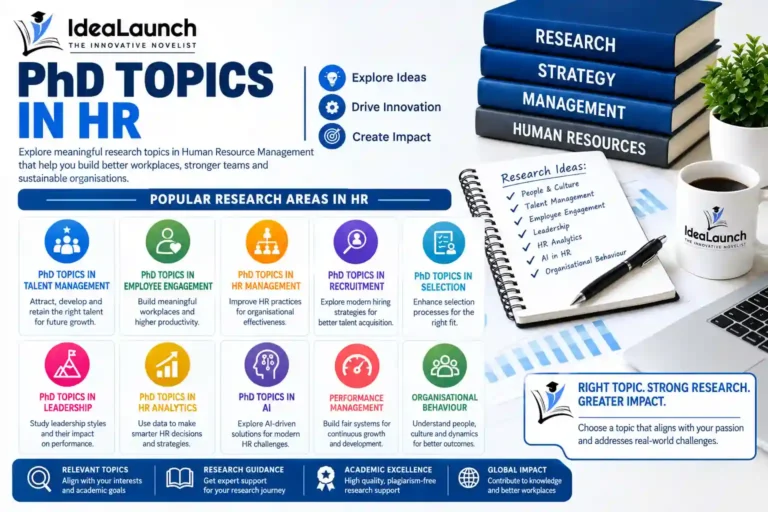
Table of Contents
PhD Research Topics for HR 2026: Research Areas and Topics
Selection of an appropriate topic of PhD research for Human Resource Management (HRM) sets a definite path for research at the doctoral level. An appropriate topic for conducting HR research must define a particular organisational problem, identify a research gap, and provide an opportunity for contributing something useful in the area of human resources management, employees management, organisational behavior, leadership, or workplace policies.
An appropriate topic for HR research must be specific, researchable, feasible, and relevant for the selected area of HRM.
An appropriate topic also aids researchers in defining research questions, populations of research, variables, theories, methodologies, data sources, and techniques of analysis.
Why Choosing the Right HR PhD Topic Matters
Choosing the correct topic is among the most crucial steps of the PhD research process in Human Resource Management since it affects such aspects of the research as its problem statement, target population, variables, theoretical framework, methodology, data collection and analysis, and expected contribution.
A correct topic will help you to:
- State the HR research problem
- Identify a gap in Human Resource Management
- Choose the appropriate population of employees/organisation
- Set up research questions/hypotheses
- Choose relevant HR theories/conceptual frameworks
- Choose the appropriate research methodology
- Choose organisations/industries/workplace settings for research
- State research goals
- Choose variables and measurable outcomes
- Choose appropriate methods of data collection
- Do research within the given timeframe and with the given budget
- Take care of all ethical aspects related to researching employees and organisations
- Contribute to HRM practice, organisational policy, leadership, or management of employees
The chosen topic should correspond to your HR specialisation and deal with an organisational/workforce research problem.
How to Choose HR PhD Topics for Research?
Choosing a broad area like talent management, employee engagement, organizational behaviour, leadership, HR analytics is only the first step. Below are the methods that will allow you to turn your broad HR interests into a research problem.
1.Choose Your HR Specialty
Choose any interesting area in HR, including strategic human resource management, talent management, employee engagement, organizational behaviour, leadership, recruitment and selection, compensation, performance management, diversity and inclusion, HR analytics, organizational development, or workplace technology.
2.Look into Current HR Literature
Study recent journal articles, systematic reviews, empirical papers, dissertations, organizational reports, HR policies, and business research databases to find out what is currently known and needs further exploration. Understanding the importance of the literature review in PhD research and the reliable sources of literature review in research will make this stage far more productive.
3.Identify a Research Gap
Find questions that remain unanswered, inconsistencies in the literature, understudied employee categories, limitations in previous methodologies, changes in workplace practices, new technologies, or organisational issues that have not received sufficient attention.
Doctoral dissertations available from Shodhganga could also be helpful in analysing previous research on HR topics to identify possible gaps.
4.Narrowing down the Topic
Translate the chosen HR topic to a specific research problem related to a particular employee category, organisation, industry, workplace practice, HR intervention, leadership problem, technology, or organisational outcome.
5.Formulating Research Questions
Formulate research questions using the identified research gap. Depending upon the chosen research approach, frame hypotheses or propositions. These questions will serve as a basis for your doctoral research proposal and methodology.
6.Testing Feasibility and Originality
Find out if you can gain access to employees, managers, HR personnel, organisations, workplace data, HR records, or any other necessary information. Also find out if the topic is feasible enough and has enough originality for doctoral research.
Current PhD Research Topics in HR
1. Talent Management Research Topics
Talent management offers a range of research topics regarding employee development, high potentials, talent retention, succession planning, workforce capabilities, and organisational performance.
Talent Management Research Topics Ideas
Talent Identification and Development
- Talent Identification and Employee Performance Practices
- Developing talent and organizational performance
- Career Advancement and Development of High Potential Employees
- Employee Competency Levels and Talent Management Strategies
Talent Retention
- Managing Talent and Keeping Employees
- Opportunities for Career Growth and Retaining Talent
- Organizational Support and Retaining High-Performing Employees
- Basic Salary, Progress, and Retaining Employees
Succession Planning
- Organizational Continuity and Succession Planning
- Developing Leaders and Succession Planning
- Performance of the Organization and Succession Management
- Future leadership and strategic talent planning
Talent Management Strategy
- Strategic Talent Management for Competitive Edge
- Employee Engagement and Talent Management Practices
- Organizational commitment and talent management
- Workforce Performance and Inclusive Talent Management
2. Employee Engagement Research Topics
Employee engagement research covers motivation, commitment, experiences at work, organisational support, job satisfaction, productivity, and other factors that affect employee engagement.
Employee Engagement Research Topic Ideas
Employee Engagement
- Organizational Performance & Employee Engagement
- Job Involvement and Employee Performance
- Employee Engagement and Commitment to the Organization
- Influencers of Employee Engagement
Workplace Support
- Organizational Support and Employee Engagement
- Management Support and Team Engagement
- Recognition at Work and Employee Motivation
- Employee Engagement and Empowerment in the Workplace
Employee Experience
- Organizational Commitment and Employee Experience
- Employee engagement and work culture
- Employee Experience and Job Satisfaction
- Workplace Engagement and Digital Employee Experience
Involvement and Retention
- Employee engagement and intention to quit
- Employee Engagement and Retention in the Workplace
- Employee Engagement and Career Development
- Employee Recognition and Retention Behavior
3. PhD Topics in HR Management
Strategic HRM is concerned with how human resource management practice is aligned with the organisational strategy, workforce capabilities, business performance, innovations, etc. If your interest extends beyond HR into general management, you can also review these PhD research topics in management.
Strategic HRM Research Topic Ideas
Strategic Human Resources Practices
- Strategic Human Resource Management and Organizational Performance
- Competitive Advantages and Strategic HR Practices
- Human Resource Strategy and Staff Performance
- Strategic Workforce Planning and Business Performance
HR and Organization Performance
- Human Resource Practices and Organizational Effectiveness
- Strategic HRM and Employees’ Productivity
- HR Strategy and Innovation in Organizations
- Human Capital Management and Business Results
Workforce Strategy
- Workforce Planning and Organizational Sustainability
- Workforce Management Strategy and Employee Productivity
- Organizational Development and Human Capital Strategy
- Workforce Capabilities Development and Business Performance
Strategy HR and Change
- Strategic HRM and Organizational Change
- Digital Transformation and HR Practices
- Strategic Human Resource Management in the Times of Organizational Change
- HR Strategy and Organizational Resilience
4. PhD Topics in Recruitment
Recruitment topics include attracting talent, recruitment methods, branding as an organization, online recruitment, recruitment technology, and candidate experience.
Recruitment Research Topic Ideas
Recruitment Strategies
- Recruitment Strategies and the Quality of New Hires
- Sources of Recruitment and Performance of Employees
- Strategic Recruitment and Organizational Effectiveness
- Referral Programs for Employees and Recruitment Efficiency
Digital Recruitment
- Candidate Attraction and Social Media Recruitment
- Hiring outcomes and digital hiring practices
- Candidate Experience and Online Recruitment Site
- Recruitment and Selection Using Technology
AI in Recruitment
- Artificial Intelligence in Recruiting
- Recruiting and Candidate Experience Powered by AI
- Algorithms for recruitment and hiring
- Hiring Efficiency and AI Hiring Tools
Employer Branding
- Employer Branding & Talent Attraction
- Employer brand and Employees’ Intentions to Recruit
- Job-Seeker Behavior and the Reputation of Companies
- Employer Branding and Talent Acquisition Results
5. PhD Topics in Selection of a Topic in Research
The topic of research involves finding research gaps, formulating research questions, assessing the feasibility of the topic, and choosing original areas for research.
Research Topic Selection Ideas
Research Gap identification
- Finding Research Gaps to Choose PhD Topics
- Research Gaps and Development of New Research Topics
- Forming a Research Topic and Identifying Gaps in the Literature
- Research and Choice of Topics: New Directions
Research Question Development
- Research Questions and Choosing Good Topics
- Formulating Research Questions from Research Gaps
- Research Questions and the Development of the PhD Research Topic
- Objectives of the Research and Choice of Topic
Topic Feasibility
- PhD topic choice and research topic feasibility
- Research scope and topic choice
- Availability of Data and Research Topic Feasibility
- Research Tools and Selecting Your Topic
Emerging Research Fields
- PhD Research Topics and Emerging Trends Selection
- Cross-disciplinary research and topic development
- New Research Topics and Emerging Technologies
- Trends in current research and selection of PhD topics
6. PhD New Research Topics in Leadership
Areas for conducting new leadership research include new leadership paradigms, digital transformation, employee behavior, organizational change, and future leadership practices.
New Leadership Research Topic Ideas
Emerging Leadership Models
- Transformational Leadership and Employees’ Performance
- Staff Wellbeing and Servant Leadership
- Ethical Leadership and Organizational Trust
- Engagement and Inclusive Leadership of Employees
Digital and AI Leadership
- Organizational Innovation & Digital Leadership 2.
- Leadership and Managerial Decisions with the Support of AI
- Effectiveness of Remote Teams and Virtual Leadership
- Workforce Flexibility & Technology Leadership
Employee Behavior and Leadership
- Leadership Style and Employee Motivation
- Job Satisfaction and Leadership Behavior
- Leadership and Psychological Safety
- Leadership Behavior and Employee Empowerment
Leadership and Organizational Change
- Leadership and Change Readiness of the Organization
- Organizational resilience and adaptive leadership
- Leadership Strategies for Changing the Workplace
- Leading and Innovating in the Organizations
7. PhD Topics for in HR Analytics
HR analytics studies the application of workforce data, statistics, modeling, and information technology to enhance decision-making in human resource management. Choosing between descriptive, exploratory and explanatory designs here is easier once you understand the types of research in research methodology.
HR Analytics Research Topics Ideas
Workforce Analytics
- Workforce Analytics and Strategic HR Decision Making
- Employee Performance & HR Data Analytics
- Workforce Data and Human Resource Retention
- People Analytics & Organizational Performance
HR Analytics – Predictive
- Predictive analytics for workforce turnover
- Predictive HR Models and Employee Retention
- People Analytics and Absence Forecasting
- Talent Management and Predictive Analytics
Data-Driven HR
- Organizational performance and HR decision-making based on data
- Strategic Decision-Making and HR Analytics Capability
- Evidence-Based Human Resource and Workforce Management
- Quality of HR data and effectiveness in decision-making
HR Analytics Capabilities
- HR Analytics Skills and Performance of HR Professionals
- Data Literacy for HR Professionals
- HR Analytics Competencies and Strategic HR Management
- The reasons for the adoption of HR Analytics
8. PhD Topics in Artificial Intelligence
AI research for HR may include intelligent decision-making, machine learning, generative AI, prediction, employee experience, and responsible AI usage. Before framing an AI-related HR study, it is worth reviewing how AI is changing PhD research in 2026 and the UGC norms on AI usage in PhD.
Artificial Intelligence Research Topics Ideas
AI and Human Resource Management
- Artificial intelligence in human resources management
- Decision Making in HR with AI
- AI Adoption and Effectiveness of HR Professionals
- Artificial intelligence and human resource management
Generative AI & HR
- Generative AI and Employee Productivity
- Generative AI in Recruitment and Talent Acquisition
- Generative AI and Workplace Decision-Making
- Employee Acceptance of Generative AI Tools
AI and Employee Management
- AI-Based Workforce Management and Employee Performance
- AI and Employee Engagement
- AI-Driven Performance Evaluation and Employee Outcomes
- AI and Personalised Employee Development
Responsible AI in HR
- Ethical Challenges of AI in HR Decision-Making
- Algorithmic Bias in AI-Based Recruitment
- Employee Trust in AI-Driven HR Systems
- AI Transparency and Employee Acceptance
9. Performance Management in PhD
The performance management area is concerned with performance appraisal, feedback, goal setting, rewards, productivity, competency development, and organisational performance.
Performance Management Research Topics Ideas
Performance Review
- Employee performance and performance appraisal
- The Way Employers Understand Performance Appraisal Systems
- Employee Motivation and Performance Evaluation
- Employee Engagement and Equal Performance Appraisal
Goal Management
- Setting Goals and Their Impact on Employee Performance
- Performance Targets and Employee Motivation
- Clear Goals and Work Productivity
- Strategic Performance Goals and Organizational Outcomes
Development and Feedback
- Feedback from Employees and Performance Improvement
- Ongoing Feedback and Employee Involvement
- Manager feedback and employee development
- Performance feedback and motivation at work
Performance & Rewards
- Employee Performance and Compensation System
- Performance-Related Incentives and Employee Motivation
- Compensation and productivity of employees
- Practices of Employee Performance and Recognition
10. PhD Topics on Organisational Behaviour
Organizational behaviour studies look into employee behaviour, organizational relations, motivation, organizational commitment, psychological safety, and team behaviour.
Organizational Behavior Research Topic Ideas
Workplace Culture
- Impact of Organizational Culture on Employee Performance
- Culture of the Workplace and Employee Engagement
- The Role of Organizational Culture on Employee Retention
- Innovation and Organizational Culture
Organizational Commitment
- Employee Performance and Organizational Commitment
- Support at Work and Organizational Commitment
- Employee Engagement and Turnover Intention
- Organizational Values and Organizational Commitment
Workplace Relationships
- Trust in the Workplace and Employee Performance
- Employee Relations and Employee Engagement
- Manager-Employee Relations and Job Satisfaction
- Team Cooperation and Organizational Performance
Psychological Safety
- Voice and Psychological Safety
- Psychological Safety and Team Performance
- Trust at Work and Psychological Safety
- Leadership and Psychological Safety in Organizations
Emerging Research Areas for an HR PhD Research
| New Research Area | Topics for Research Where an HR PhD Can Be Done |
|---|---|
| AI in HR | AI-assisted recruitment, HR automation, algorithmic decision-making, AI implementation, and acceptance by employees. |
| HR Analytics | People analytics, workforce forecasting, turnover, decision-making in HR based on data analysis, and workforce forecasting. |
| Digital HR | Digital HR platforms, digital HR technologies, employee experience, automation, and digital HR transformation. |
| Future of Work | Working remotely and hybrid working, flexible working, automation, digital workplaces, and changing structure of workforce. |
| Talent Management | Talent development, succession management, high-potential talent, retention, and workforce planning. |
| Employee Engagement | Employee experience, workplace engagement, organizational commitment, recognition, and employee retention. |
| Strategic HRM | Human capital strategy, workforce planning, strategic HRM alignment with business, and organizational performance. |
| Leadership Research | Transformational and ethical leadership, leadership development, employee empowerment, and workplace trust. |
Research Gaps: Suggestions for HR PhD Research Topics
| Type of Research Gap | Explanation | Example/HR Field of Research |
|---|---|---|
| Population Gap | A certain group of employees, HR professionals, managers, or workforce segments hasn’t been studied enough. | Talent management → young employees |
| Geographic Gap | Current research is limited to specific countries, regions, or industries. | Employee engagement → employees working for organisations in emerging markets |
| Organisational Gap | Specific organisations haven’t been studied well enough. | Digital HR → HR practices in SMEs |
| Methodological Gap | Previous research uses limited research approaches or methods. | Employee wellbeing → longitudinal study of workplace stress |
| Technology Gap | New technologies haven’t been studied enough in relation to HR practices. | HR analytics → HR workforce decisions made with the use of artificial intelligence |
| Outcome Gap | Previous studies are focused on short-term outcomes; long-term effects are understudied. | Employee engagement → retention outcomes |
| Evidence Gap | Previous research is inconsistent; insufficient evidence is provided. | Performance management → efficiency of continuous feedback |
| Policy Gap | HR Policies within organisations may have been formed, but the extent to which they are being followed and how effectively they are being followed is yet to be studied. | Diversity → Inclusion policy in the workplace |
| Theoretical Gap | There is little focus on an HR topic through an alternative theory in current HR studies. | Leadership → Psychological Safety and Employee Voice |
| Interdisciplinary Gap | Human Resource problems can be considered through management, psychology, technology, economics, sociology, and data science. | HR Analytics → AI, employee behavior, and organisational performance |
What Determines the Feasibility of an HR PhD Topic?
Here are some points to consider for your topic selection:
| Factor | Questions |
|---|---|
| Research Problem | Is there an HR or organisational problem worth researching? |
| Research Gap | Does the research gap stand up to scrutiny in light of the existing HR and management literature? |
| Originality | Does the study produce any original results, relations, intervention strategies, models, or theory? |
| Study Participants | Are employees, managers, HR practitioners, or organisational leaders available for the study? |
| Organisational Access | Is permission available to do research in organisations or at workplaces? |
| Data | Are survey, interview, HR, performance, or secondary data available? |
| Literature | Is there enough literature to build on the research context and gap? |
| Methodology | Is a suitable methodology available (qualitative, quantitative, mixed methods, experiments, longitudinal studies, etc.)? |
Common Challenges in Choosing an HR PhD Topic
An HR researcher might have various areas of interest such as employee engagement, talent management, leadership, HR analytics, organizational behavior, and HR technology. It is challenging to focus such varied interests into an HR doctoral research problem.
Some common problems that HR PhD candidates encounter during the selection process include:
- Focusing on the broad HR research field
- Determining the organizational research problem
- Identification of research gap
- Choice of HR theory or framework
- Definition of the employee or organizational population
- Access to organizations and employees
- Recruitment of participants
- Access to the confidential data related to HR or the organization
- Choice of the research design
- Identification of research variables
- Research questions or hypothesis formulation
- Organizational or ethical approvals
- Employee confidentiality
- Originality and contribution at doctoral level
It is possible that the use of new HR technology, such as AI, HR analytics, automation, working remotely, or digital HR, does not provide the needed originality to the research topic unless a research gap and contribution can be established.
Frequently Asked Questions
Choose your HR specialisation, study the latest HR and management literature, pinpoint an evidence or theory gap, and formulate the problem based on the employee population, organisation, industry, HR practice, or outcome.
Your HR PhD topic should be narrow enough to study an organisational problem, employee population, HR practice, variables, relationship, intervention, or outcome.
Gaps may involve employee populations, organisations, geographic limitations, methodological limitations, inconsistent results, technology, theory, policy-practice, and lack of evidence for HR interventions.
No. Originality can be achieved through researching an already existing HR concept using a different employee population, industry, organisational context, intervention, methodology, theory, comparison, or application.
Yes. Human resource studies may relate to organisational psychology, business management, sociology, economics, data science, artificial intelligence, information systems, public policy, and organisational behaviour.
Why Is IdeaLaunch Reliable for Developing a PhD Topic in HR?
IdeaLaunch can help PhD researchers develop topics based on the HR specialization, research interest, target employees, organization, and research direction.
Specialization-Based Topics
Topics can be developed for strategic HRM, talent management, employee engagement, organizational behavior, recruitment and selection, performance management, compensation, leadership, HR analytics, digital HR, and workplace management
Literature Review for Research Gaps
Gaps that may exist in relation to employee population, organization, HR practice, leadership approach, workplace technology, talent management, and organizational outcomes can be analyzed through a literature review.
Research Direction
Topics can be linked to research questions, research objectives, hypotheses, theories, methodology, data gathering, and analysis with the help of a PhD research guidance, and can be carried forward into your research proposal, synopsis, and thesis.
Many HR Research Topic
Development of research topics may entail talent management, employee engagement, strategic HRM, leadership, organizational behavior, recruitment, compensation, performance management, HR analytics, HR and artificial intelligence, diversity, and digital HR.
Unique & Feasible Research Topic Ideas
Topics for research may be developed based on unique, researchable, relevant, and feasible HR issues, taking into account the employee demographics, organization, industry, available data, resources, and PhD research duration.
Struggling with Selecting an HR PhD Topic?
Selecting an appropriate topic for your PhD in HR could become tricky when you are inclined towards issues such as talent management, employee engagement, leadership, HR analytics, organizational behaviour, AI in HR, diversity, and strategic HRM, but do not know how to turn it into a research problem, research questions, methodology, and academic contribution.
If you are struggling with defining your research approach, then selecting a PhD topic selection could help you with forming your HR research approach.